The health calendar highlights October 29 as World Stroke Day. Stroke is the second leading cause of death in Brazil and the main cause of disability in the world. It occurs when the vessels that carry blood to the brain become blocked or burst, causing the death of the area left without circulation.
According to nurse Marisa Malvestio, who is part of the Care Projects Unit of the Mobile Emergency Care Service (Samu 192), almost 2 million neurons are lost every minute during a stroke if it is not treated.
“That is why the person next to you is the key to getting help, saving a life or minimizing after-effects.”
According to Ministry of Health studies, one in four people will have a stroke in their lifetime. And although it is more common among people over 60, ministry data show that more and more people from age 45 onward have been affected.
In São Paulo’s municipal network, 9,394 people were hospitalized for ischemic or hemorrhagic stroke between January 2023 and July 2026, according to data from the Epidemiology and Information Coordination Office (CEInfo) of the Municipal Health Department (SMS).
Ischemic stroke, which accounts for 85% of cases, occurs when a clot blocks a blood vessel, preventing blood from reaching part of the brain, while hemorrhagic stroke happens when a blood vessel ruptures, causing bleeding inside or around the brain.
If patients do not receive appropriate treatment in time, they may be left with serious after-effects or even die. The guidance is to watch for sudden weakness or tingling in the face, arm or leg, especially on one side of the body. Mental confusion, changes in speech or comprehension, changes in vision in one or both eyes, loss of balance or motor coordination, dizziness or difficulty walking, and a sudden or intense headache with no apparent cause are among the warning signs.
“You are near a person who suddenly starts to slur their words, stuttering, struggling to articulate. But they were talking normally with you a minute ago… that can be a sign. Or the person was walking just fine and suddenly loses control, loses their footing, falls. They can no longer walk, they lost their balance. Suddenly, their mouth droops to one side. All of these are signs of a stroke,” explains Marisa.
The nurse also gives tips on how to recognize a possible stroke, especially when symptoms appear suddenly. “It is a small assessment that any citizen can perform to make sure that, yes, a stroke may be happening at that moment.”
Three important steps
- Look at the person face to face and ask them to smile or show their teeth;
- Ask them to say a simple sentence;
- Lastly, ask them to raise their arms and keep them raised. If necessary, you can help the person lift them and then release them. If one of them drops, it is a sign.
These changes require immediate care. However, Marisa stresses that all three signs do not need to be present to suspect a stroke. With a suspicion and one sign, the guidance is to call Samu immediately at 192, stating, if possible, the time the symptoms began, so the team can send the patient to the appropriate service.
It is essential that care takes place within a window of four and a half hours, related mainly to the possibility of thrombolytic treatment in eligible patients with ischemic stroke. The nurse stresses that this period should not be seen as a deadline to wait before seeking help, nor as a limit for all treatments.
In the capital, the Stroke 360 Care Line, started by the Municipal Health Department (SMS), promotes the integration of urgent and emergency services and hospital care to speed up treatment. The patient is referred to the appropriate hospital, with a CT scan and access to the indicated treatments. “But it is important to call Samu in time,” Marisa stresses.
Healthy lifestyle
Changing your routine is essential to prevent strokes and other cardiovascular diseases. The first step is regular blood pressure monitoring, which should be 12 over 8. Hypertension has no cure, but regular treatment is vital.
Keeping an ideal weight helps control hypertension, diabetes and cholesterol. If there are many cases of heart disease in the family, take precautions early. The Basic Health Units (UBSs) in the municipal network are open to offer guidance and treatment.
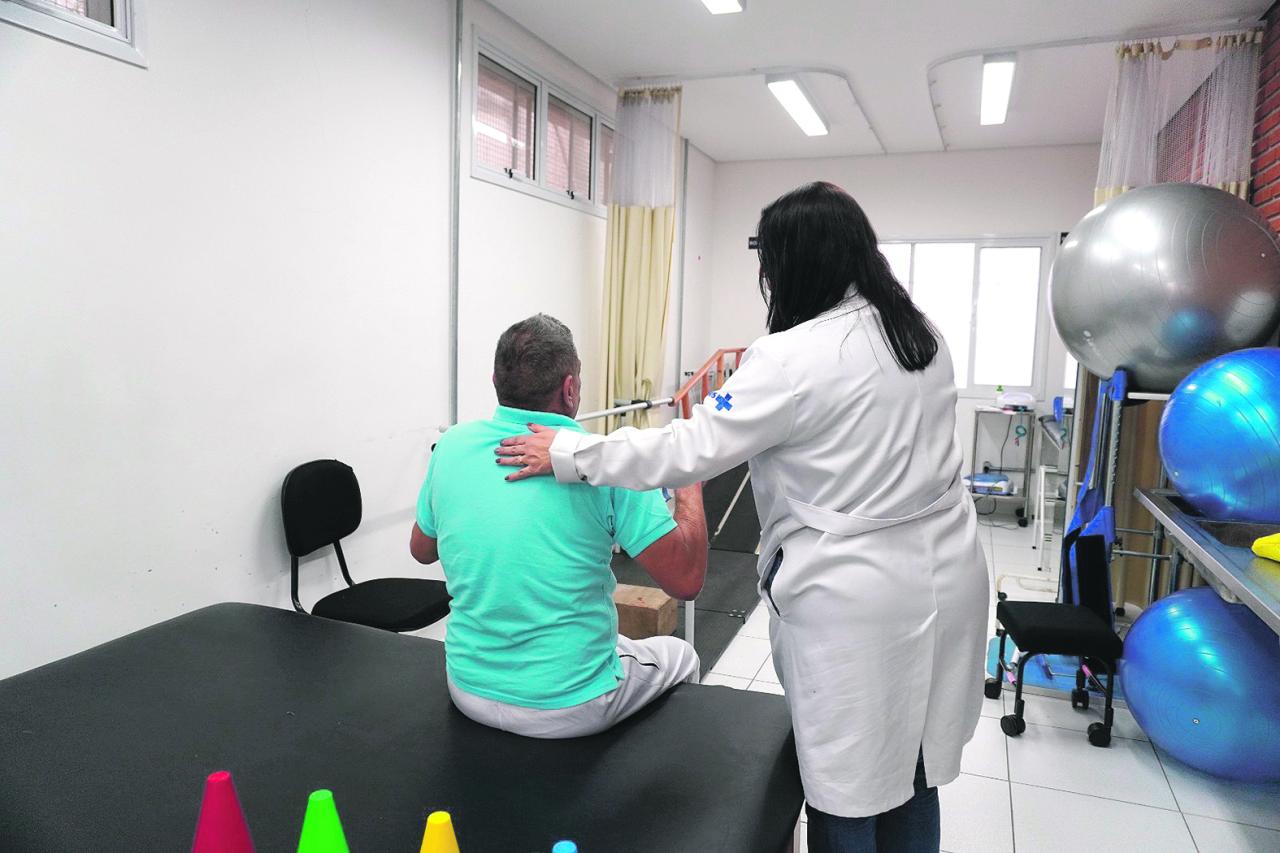
Neurologist Arthur de Medeiros Dias, who coordinates the stroke care line at Ermelino Matarazzo Municipal Hospital, in the East Zone, is firm about adopting a healthy lifestyle. “Avoid smoking, try to sleep better, control alcohol intake, adopt a diet rich in fruits, vegetables, legumes, grains and lean proteins,” he lists, also highlighting the importance of at least 150 minutes a week of regular physical activity. “Is your day going to end late at night? Wake up half an hour earlier and walk around the building. You need to stop for half an hour to walk. No space? Put on some music and walk down the hallway at home, but walk,” the doctor advises.
To learn more about the signs of stroke, heart attack and seizures, watch the SaúdeCastSP episodes with nurse Marisa Malvestio and neurologist Arthur de Medeiros Dias. The episodes are in Portuguese.